The following notes may be helpful in understanding Plymouth Colony and the life of Alice Martin Bishop.
Community Standards:
Plymouth may have been settled upon with a Utopian mindset, but living there was hellish. It would take fifteen years for the Pilgrims to remove themselves from chronic starvation mode as the few English ships brought enough provisions and settlers had yet to master agriculture, hunting and livestock management in the new land (Walsh, 10). Even in the more popular Massachusetts Bay Colony’s Boston, “food was so scarce…that the poorer people had nothing save acorns, clams and mussels to eat” (Walsh, 10). In January 1632, Governor Winthrop “appointed a day of prayer [in which] every man, woman, and child in the Bay Colony spent his or her time praying to the Lord to save them from starvation” (Walsh, p. 11).
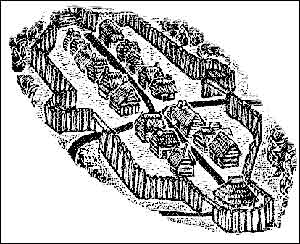
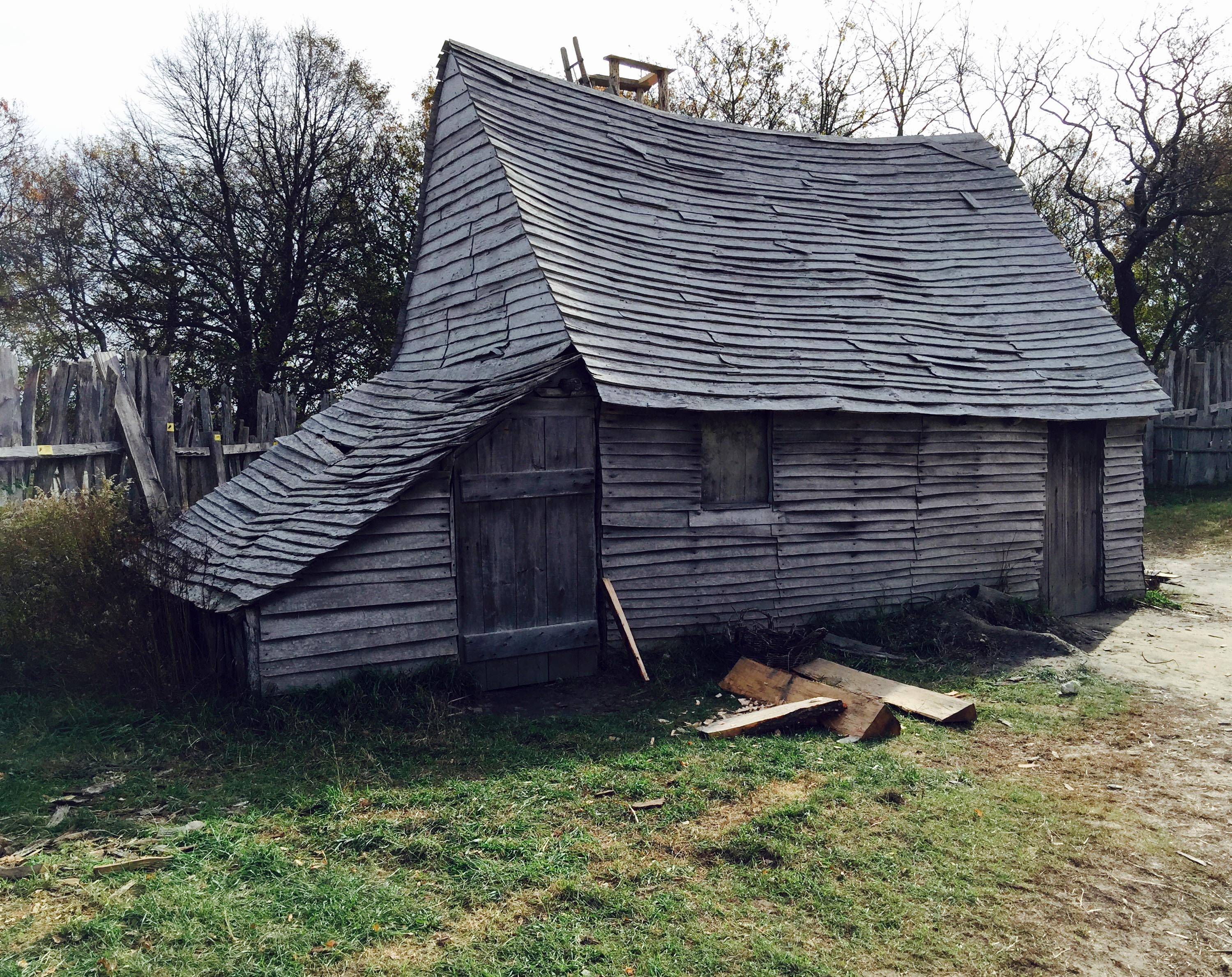
Plymouth set upon building twenty homes in their first year (most lived aboard the Mayflower the first year). But because the community was ravaged by disease, only seven homes were built (Philbrick, 80). Within ten years, the colony had 300 people with the population swelling to 2,000 by the mid 1640’s.
Each town in Plymouth could choose who could live amongst them including excluding less than desirables (Powell, xviii). In other words, Clark and Bishop may have wandered in from other colonies, but they ultimately earned the right to stay.
By 1690, Plymouth Colony comprised more than a dozen towns with Plymouth proper being one of the largest and most centrally located. Nonetheless, it was becoming a quaint backwater to Massachusetts Bay Colony.
Massachusetts Bay Colony Est. 1629:
4 March 1629 a royal charter created the Massachusetts Bay Colony Corporation to be governed by a Governor, deputy governor and eighteen assistants who comprised a council. “They were permitted to make whatever laws they liked …provided that such laws did not oppose the laws of England” (Walsh, 3). In 1630, under the new charter, seventeen ships departed for the MBC including one with Governor John Winthrop and settled in the city of Boston. MBC would quickly dwarf Plymouth Colony with the former having 1000 residents which was three times the size of Plymouth (Philbrick, 147). The distance between the two colonies was approximately fifty miles.
Religion:
We all have been taught about the Pilgrims and Puritans but these are not interchangeable terms. Puritanism is a religious sect that emerged from the Anglican Church (England). Puritans of the sixteenth century wanted to “purify” the Church of what they felt were corrupt and secular practices. Ultimately, Puritans wanted to practice their faith as had been done in the earliest forms of Christianity. Notably, Puritans believed the Bible was the sole source of religious education and development and that certain church rituals and practices were not biblically based and therefore not pure to the Christian faith.
Pilgrims derived from the Puritan movement and were those communities that decided the only way to practice their Christian faith appropriately was to separate entirely from the Anglican Church. Therefore, those who sailed on the first ships to New England (1620’s – 1630’s) are known as Pilgrims. These Pilgrims were neither England’s wealthiest or poorest but often self-educated yeomen (Morgan, 35). Philbrick’s Mayflower: A Story of Courage, Community, and War does an outstanding job of explaining this history.
The church served as each colonial town’s keystone institution where important meetings and social gatherings took place. Not every Plymouth resident was a Pilgrim (some of these were known as “Strangers”) but sustained church participation certainly leveraged greater social prestige. Church attendance was required of all citizens in each Plymouth town but attendance did not guarantee you were a member of the church. Declared personal conversion ensured membership and while good works were indicative of salvation, they were not the means by which one gained eternal salvation. Amongst the New England Pilgrims, there was no central governing entity with authority over colonial churches.
Godly Mission Meets Reality:
Puritans had thought they would be an almost homogenous group, saintly to be sure:
In coming to the wilderness, then, the founders of New England hoped to protect their children from profanity. In the new world they expected to have the company of godly men like themselves. They miscalculated. To be sure, they could have supposed that all the inhabitants of their new Canaan would be saints; they must have expected many scoundrels to show up—and they were prepared to deal with scoundrels – but they did not imagine that the emigration would bring to the shores of Massachusetts Bay such a horde of average, lusty Elizabethan Englishmen (Morgan, 170). And [t]he number of unregenerate who crossed the ocean along with the saints was too great to banish from the land (171).
More often than not, Strangers, servants, convicts and others outnumbered Saints to a great degree (170). Here the godly at least controlled the government, as they definitely did not in old England. If they had not escaped the unregenerate, they had at least gained political power over them. No sin would be condoned, much less encouraged (171).
Satanic Worries:
The Pilgrims believed in malevolent spirits. They did not, like those in Massachusetts Bay Colony believe in town hysteria. Plymouth would not experience the witch crazes that ravaged other parts of New England. The 1636 Plymouth Code of Laws cites witchcraft as a capital offense, punishable by death, however there were not actual witch convictions made in Plymouth Colony.
Lest we forget, the Pilgrims believed God had chosen them to cross the ocean and build a utopian community in a savage world (here “savage” meaning an disparaging term for Native Americans as well as a place with none of the swanky seventeenth century comforts the Pilgrims had become accustomed to). In other words, it seemed reasonable to believe in signs, omens and voices from the beyond. This was Pilgrim common sense. As an example, there was a Mayflower sailor who was a heinous bully to grown men on board (and one can only wonder how he treated children with no escape). When he fell ill with a “grievous disease [and] died in a desperate manner” William Bradford chalked it up to the action and pleasure of God. (Bradford, Chapter Nine). AMB would have witnessed if not been subjected to this bully and reasonably believed God was capable of terrible retribution. And then watched her parents felled the same way.
Morgan and Philbrick speak regularly of the supernatural and specifically malevolent influences at play in the Pilgrim psyche. ”Children were ignorant and children were evil; but ignorance could be enlightened and evil restrained, provided the effort was made soon enough” (Morgan, 97). Did Alice see herself or Martha as beyond redemption? Pilgrim authorities new that the community’s youngest souls were vulnerable as “Satan never hesitated to begin his assault upon children in their infancy” (Morgan, 96). Everyone was susceptible to a coup d’état of their soul: “The Pilgrims’ intensely felt spiritual lives did not prevent them from believing in witches and warlocks and living with the constant fear that Satan and his minions were out there, conspiring against them” (Philbrick, 79). All of this is to say that some researchers (myself included) wonder about a possible psychosis in AMB that would not have been observed as odd by her community.
Plymouth Colony Governance and Legal Structure:
The colony remains one of our nation’s greatest experiments in the development of self-governance. Unlike the Massachusetts Bay Colony which had received a chart from the English government, the Pilgrims had no authority to form a government. But they did anyway with their first document being the 1620 Mayflower Charter. Formal laws were not codified for another fifteen years (known as the 1636 Book of Laws) and represented a mix of biblically-based tenets and English common law.
Notes from Fennell: Each March, a Governor and seven Assistants were elected at the General Court session by freedmen. The General Court served as the legislative-judicial body for the colony. Assistants served as the cabinet to the Governor “giving [their] best advice both in publick Court [and] private Councell [with] the Gov[ernor] for the good of the Colonyes [within] the limit[s] of this Governm[ent]” (PCR 11: 8). Also elected were Constables who were tasked with keeping the peace in each town and Messengers who, relevant to this story, delivered court-ordered punishments (including executions) and served as jailers. Coroners were selected each year by the Court of Assistants to conduct inquests for suspicious deaths (see PCR 11:7). The coroners were the first town officials to arrive at the death of Martha Clark.
Quoting Fennell: The Court of Assistants also handled an array of judicial decision-making in the Colony. Each Assistant was charged with a duty of “hauing a special hand in the examina[cion] of publick offenders” and “a voice in the censuring of such offenders as shall not be brought to publick Court” (PCR 11: 8-9). An Assistant could also perform the role of examining, arresting and imprisoning suspected law breakers when the Governor was absent, as long as the defendant was presented to the full Court of Assistants or the Governor thereafter, and the Assistants often referred defendants to the full General Court for more serious charges.”
In the AMB case, it appears that:
- Governor Bradford was present from the date of Martha’s murder through AMB’s execution
- That AMB was indicted by a jury as appointed by the Court of Assistants
- That AMB was tried and delivered of her punishment by a jury as appointed by the Court of Assistants
Therefore, her trial was seen as appropriate public deliberation because of the seriousness of the crime. A jury of freedmen listened to the evidence with the Governor and Assistants serving as judicial officers.
1636 Book of Laws: Amongst other governance concerns this set of legal codes identified crimes and their expected punishments. Death penalty crimes were murder, witchcraft, treason, arson, sodomy, rape, bestiality, adultery, and cursing or smiting one’s parents. However, actual executions were relatively rare and for some of the above crimes, nearly non-existent. The execution of a parent for child-murder did occur although the circumstances heavily influenced the punitive outcome. In AMB’s case, the evidence appears so overwhelming that it is doubtful the court felt (or were inclined to feel) any leeway. We must keep in mind this was centuries before notions of insanity, mentally incapacitated and so forth were part of codified legal defenses.
Rights of the Accused
The following procedural rights were part of early American criminal proceedings (Chapin, 61, quoted excerpts):
- “No search or seizure without warrant.”
- “Confessions out of court [ruled] invalid.”
- “Grand jury indictment in capital cases.”
- “Right to confront accusers.”
- “Trial by jury’
- “No cruel or unusual punishment”
- “Right to appeal.”